The Subtle Financial Dynamics of Gift Code Allocations in Fantasy and Survival Gaming Worlds
Written by Mara Lehmann · Oct 22, 2026
The Subtle Financial Dynamics of Gift Code Allocations in Fantasy and Survival Gaming Worlds
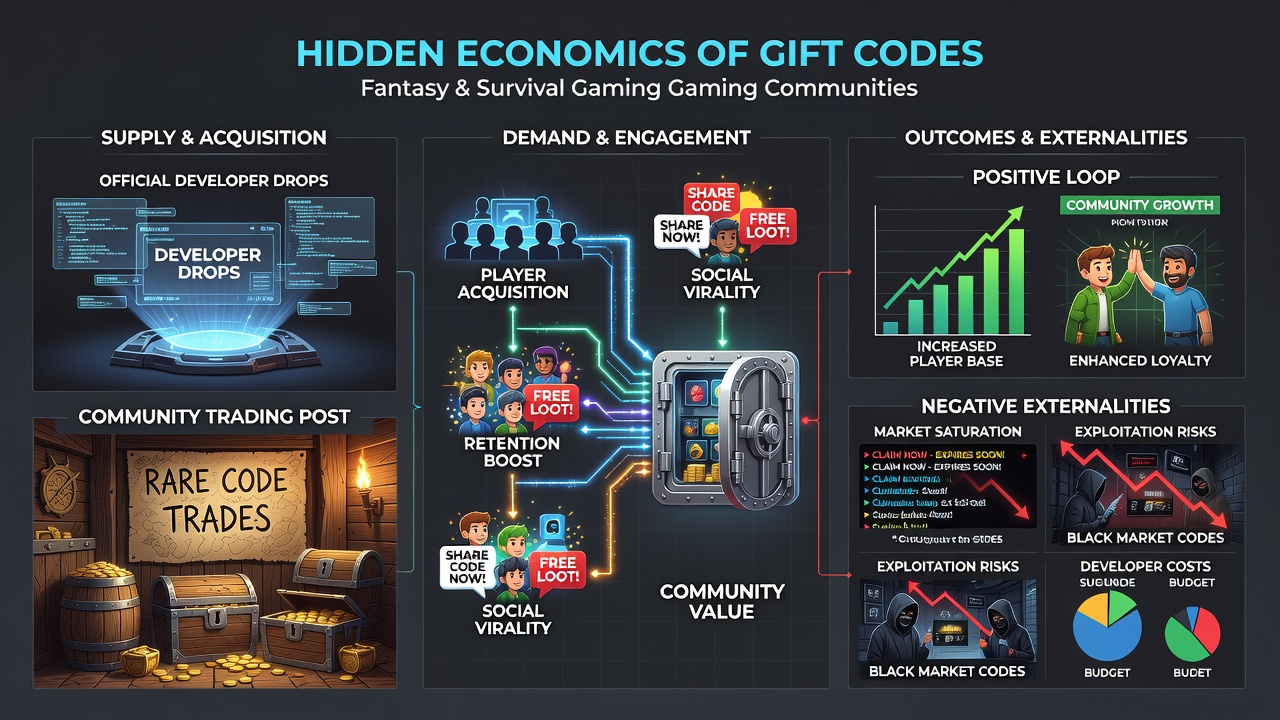
Game developers in fantasy and survival genres have integrated gift code systems as core tools for managing player bases since the mid-2010s, with distributions often tied to events that influence in-game resource flows and retention rates. These codes typically unlock currency, items, or boosts that alter virtual economies without direct monetary exchange, yet they generate measurable effects on player spending patterns and secondary market activities. Data from industry analyses indicate that such mechanisms help stabilize player counts during seasonal lulls, particularly when survival titles release expansion content around October each year.
Core Structures of Code Distribution Networks
Publishers deploy gift codes through multiple channels including social media campaigns, partnership events, and in-app notifications, which creates layered access points that segment player populations based on engagement levels. Fantasy games often link codes to narrative milestones such as seasonal festivals, whereas survival titles tie them to survival challenges like resource scarcity events, and this differentiation affects how virtual goods circulate within each ecosystem. Researchers have documented that codes distributed in October 2026 across major platforms coincided with increased login frequencies, as developers aligned releases with holiday preparation periods to maximize concurrent users.
Platforms hosting these games collect behavioral data during redemptions, which informs future allocation strategies and helps predict shifts in resource valuation. Codes that grant premium materials in survival settings, for instance, can temporarily depress prices on player-driven auction houses until supply normalizes, and similar patterns appear in fantasy economies where cosmetic or progression items enter circulation through limited-time drops.
Impact on Virtual Resource Valuation
Economists studying digital environments note that gift codes introduce controlled inflation by injecting free assets, yet developers counteract this through sink mechanics like crafting requirements or item degradation systems. In survival communities, codes providing building materials or food stocks alter short-term supply curves, which in turn influences how players allocate real currency toward convenience purchases when codes expire. Fantasy games exhibit parallel dynamics where experience boosts or rare drops shift demand for equivalent paid items, creating feedback loops that sustain overall revenue streams.
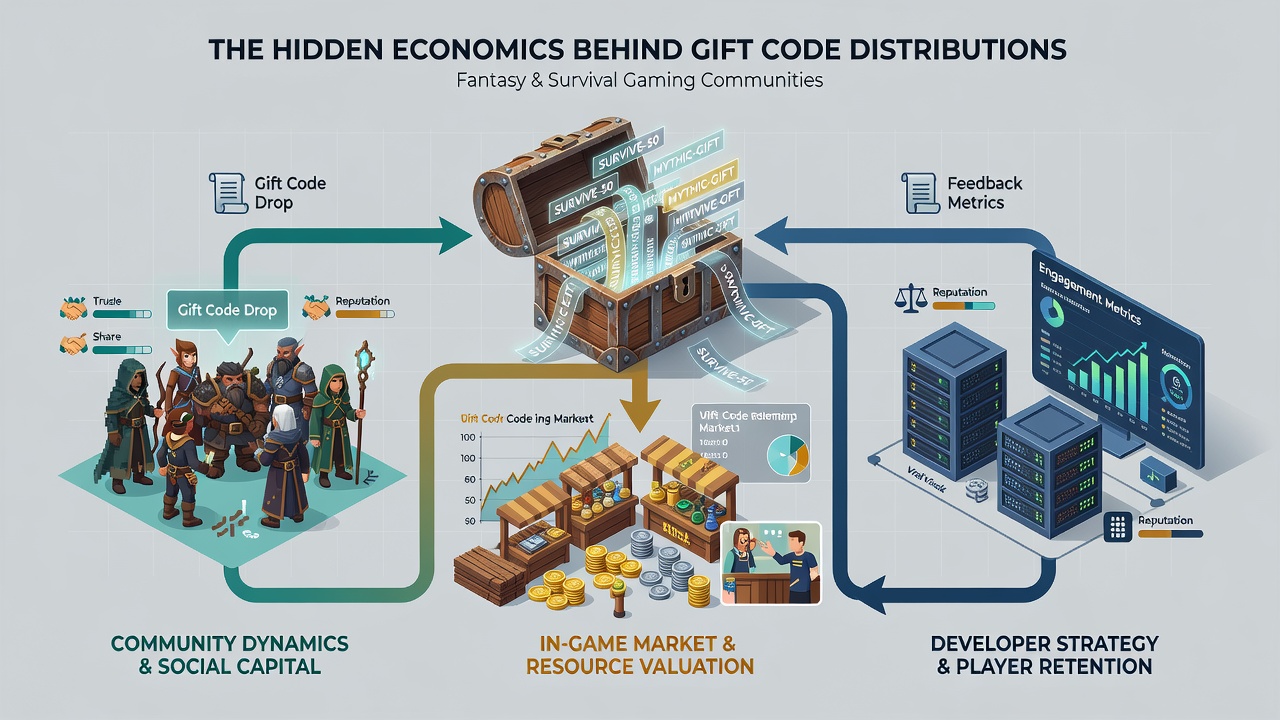
Studies from research institutions such as those affiliated with European digital economy initiatives reveal that code-driven item influxes correlate with measurable upticks in microtransaction activity within 72 hours of distribution windows. Players who redeem free resources often return for paid expansions to enhance those assets, and this pattern holds across regions where regulatory frameworks monitor digital content flows without classifying codes as gambling elements.
Secondary Markets and Player Behavior Patterns
Unofficial trading communities emerge around redeemed items when codes create temporary surpluses, allowing some players to convert digital goods into real-world value through external platforms. Survival game economies prove especially susceptible because raw materials obtained via codes retain utility across multiple play sessions, whereas fantasy titles see faster turnover when codes focus on time-limited cosmetics. Observers tracking these markets report that October 2026 distributions amplified cross-server trading volumes in several long-running titles, as players stockpiled items ahead of anticipated winter content updates.
Industry organizations including the Entertainment Software Association have compiled figures showing that code systems reduce churn rates by up to 15 percent in targeted demographics, which indirectly supports sustained advertising revenue and partnership deals. Developers adjust code rarity and value based on these metrics to maintain equilibrium between free and paid progression paths.
Regulatory and Platform Considerations
Government bodies across multiple jurisdictions, such as the Australian Competition and Consumer Commission, examine how gift code promotions intersect with consumer protection standards in digital marketplaces. These reviews focus on transparency around expiration terms and redemption limits rather than economic manipulation concerns. Platform policies from major storefronts further shape distribution by requiring verification steps that limit bulk code farming, thereby preserving intended economic balance within each game.
Academic analyses of player data sets demonstrate that survival communities respond more strongly to utility-focused codes, while fantasy groups prioritize rarity signals, and these distinctions guide how publishers calibrate release schedules to avoid market saturation.
Conclusion
Gift code distributions function as calibrated economic levers that influence resource scarcity, player retention, and revenue generation across fantasy and survival gaming landscapes. Patterns observed through October 2026 highlight ongoing refinements in allocation timing and item selection, supported by data from regulatory adn industry sources that track digital transaction volumes. These systems continue to evolve alongside platform tools and player expectations, maintaining structured flows within virtual economies without direct cash equivalents.